

Let’s observe this amazing guide to River Resin Tables
Let’s observe this amazing guide to River Resin Tables
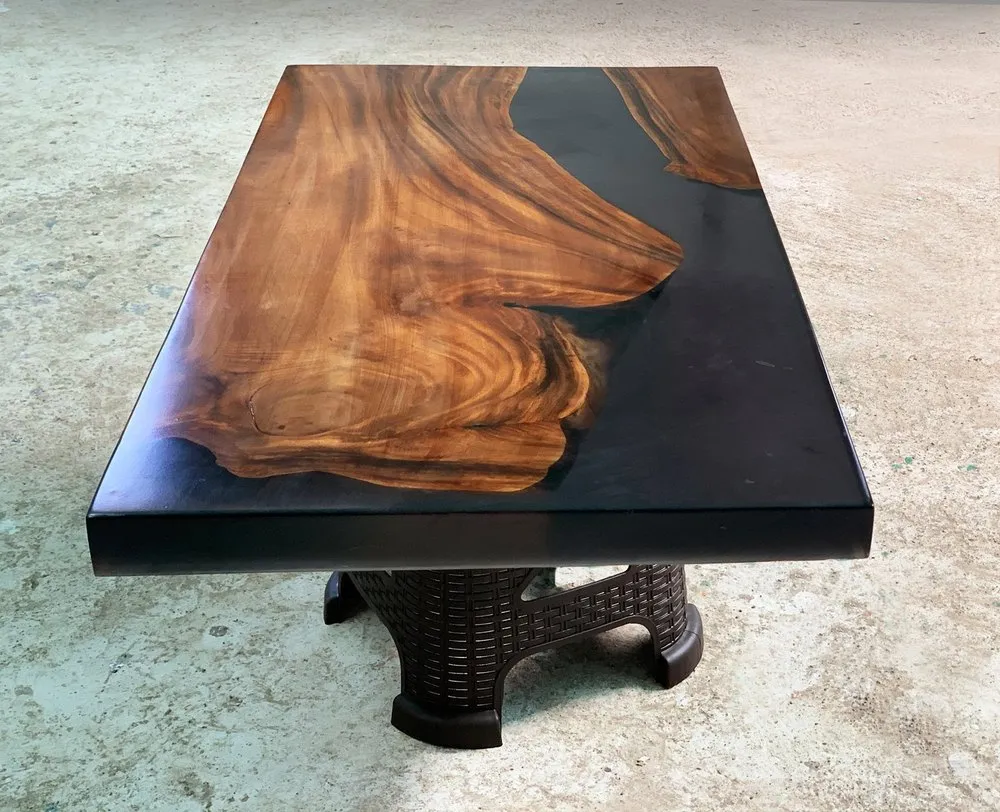
Until you’ve seen a River Table, you haven’t seen anything. These ultra-contemporary tables are based on the attention-grabbing live-edge slab tables, but they add a fake “river” made of epoxy in a watery color. When it comes time to give your “River Table” its final form, a band saw is one of the most useful equipment you may have on hand. Each of these tables is the work of an expert craftsman who has mastered the art of bringing out the best in wood’s inherent qualities. Craftspeople who specialize in epoxy also have an eye for choosing colors that will complement each other well, creating an effect that borders on the extraordinary.
Two slabs, a single huge piece of wood, or many smaller pieces of wood can all be used to create one of these tables. The stunning contrast between the natural roughness of the wood and the silky smoothness of the water-colored epoxy resin is what makes it so attractive. You may choose slabs with thick wooden legs or sleek aluminum ones. Some of our favorites include: A river table may serve as a conversation starter when used as a coffee table.
What are Resin River Tables?
A river table, in its most fundamental form, is a piece of wood that has been cut in half, with a “river” of some other material running down the middle. Thereafter, a wide range of river tables is possible.
Wood: The wood might be two separate pieces, a single slab that has been cut in half, or a book match. Live edge or smooth edge wood is OK. Round, rectangular, and square river tables are all possible. You may get river tables in sizes ranging from coffee tables to dining room centerpieces.
Many distinct iterations of the word “river” exist. Many do-it-yourself woodworkers swear by resin epoxy. Resin epoxy is poured into the space between the two pieces of wood to create the river in this technique. The epoxy can be colored with dyes, and ornamental elements like shells or petals can be embedded in it for added flair. One of our favorite “rivers” is a sheet of glass cut to follow the undulations of live-edge furniture.
River tables may have inlays made of metal alloys that cross the gap between the two planks of wood. These bowtie inlays aren’t required but they do help the table stand the test of time and contribute to the table’s visual appeal and distinct character.
What Makes a Good River Table?
River tables are quite flexible, so they may be used in a wide variety of settings. Consider the wood’s color, the river’s kind, and the table’s legs to get the best fit for your room.
Glass resin table in London, straight edges, thin bare steel legs, and light-colored woods like oak or ash are characteristics of minimalist river tables.
River tables with a mid-century modern aesthetic often include wood spindle legs, rounded or oblong forms, and sharply defined corners and edges. The walnut used to construct these classic tables of the modern era is a beautiful addition to any midcentury modern home.
These days, it’s not uncommon to see river tables with a somewhat avant-garde aesthetic, with features like colored epoxy resin, unique shapes, and an emphasis on design over function.
With sturdy wood table bases, reclaimed barnwood, and a deeper river hue like grey or topaz, river tables in the farmhouse style stay true to the genre’s rustic vibe.